




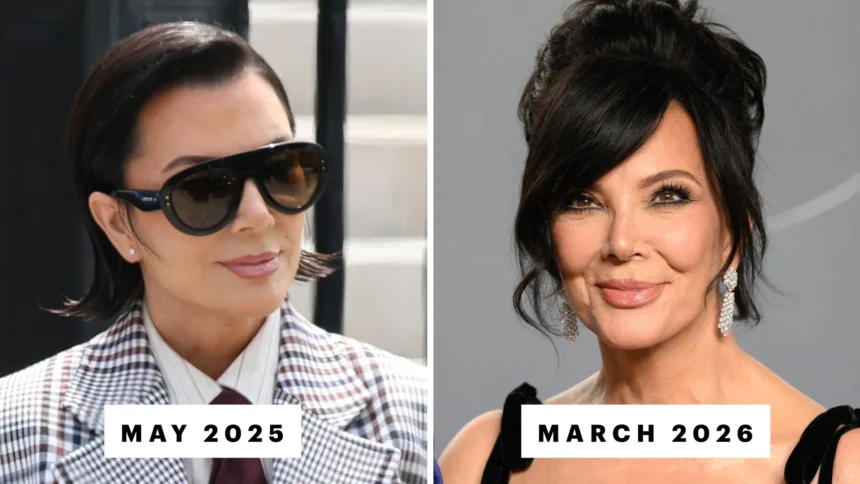
Kris Jenner’s face is trending again, and as expected, the internet has something to say.
Lately, there has been a lot of talk about Kris Jenner and her recent appearance, with rumors flying around that her facelift may not be holding up the way people expected. It is the kind of conversation that spreads quickly. One report drops, social media picks it up, and suddenly everyone has an opinion, from casual observers to professionals.
But if you strip away the noise, there is one simple truth. No one actually knows what is going on.
The claims about her being unhappy or considering another procedure are based on speculation, not confirmed facts. Still, that has not stopped people, including some plastic surgeons online, from sharing their takes. While some have tried to educate, others have used the moment to criticize certain techniques or even question the work itself. That reaction has not sat well with everyone. Surgeons like Charles Galanis have pointed out that publicly pulling down a colleague or using unverified stories to make a point does more harm than good, especially in a field where trust matters.
What makes the situation even more complicated is how little verified information is actually available. Yes, Jenner has admitted to having a facelift and described it as a refresh of a previous one. Her surgeon, Steven Levine, is respected in the industry and known for his work. Beyond that, though, the details are unclear. There are no standardized before and after photos, no exact timeline, and no breakdown of what was done.
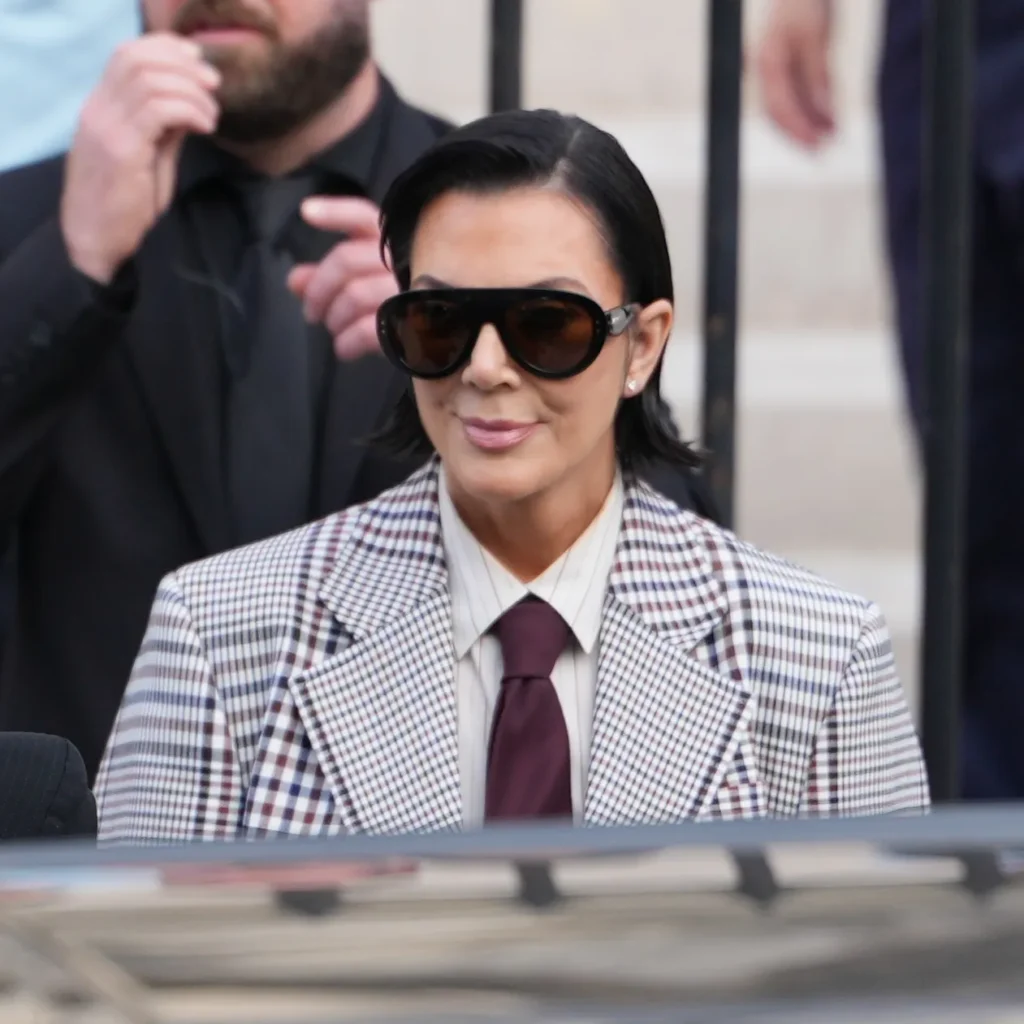
Instead, what the public has seen are curated images. Appearances in Paris, full glam, designer looks, sunglasses, and lighting that is meant to flatter. These are not clinical images, and they are not meant to tell the full story. So, trying to judge the success or failure of a procedure from those moments is already a flawed approach.
There is also a tendency online to oversimplify cosmetic procedures. Conversations quickly turn into debates about which technique is better, with people confidently comparing SMAS facelifts and deep plane facelifts as if there is a universal answer. In reality, it is not that straightforward. Different techniques work differently depending on the individual, and results can vary based on age, skin quality, and even whether someone has had previous procedures.
Age, in particular, plays a big role. Facelifts done later in life generally do not last as long as those done earlier, and repeat procedures can behave differently from first-time surgeries. These are normal medical realities, not signs that something has gone wrong.

There is also something else people often forget. After a facelift, there is an early stage where everything looks especially tight and smooth. Surgeons sometimes refer to this as a kind of honeymoon phase. As time passes, swelling reduces, and the face settles into a more natural look. That change can be subtle, but on the internet, it can easily be misinterpreted as the results fading or failing.


Without clear, unfiltered, and medically accurate images, it is almost impossible to fairly assess any of it. What people are reacting to is not a full picture, but selected moments that do not tell the entire story.
In the end, this says just as much about the audience as it does about Jenner. There is a constant need to analyze, compare, and critique, especially when it comes to appearance. But sometimes, the more honest answer is also the simplest one. We do not have enough information to draw any real conclusions.
And maybe that is where the conversation should pause.