




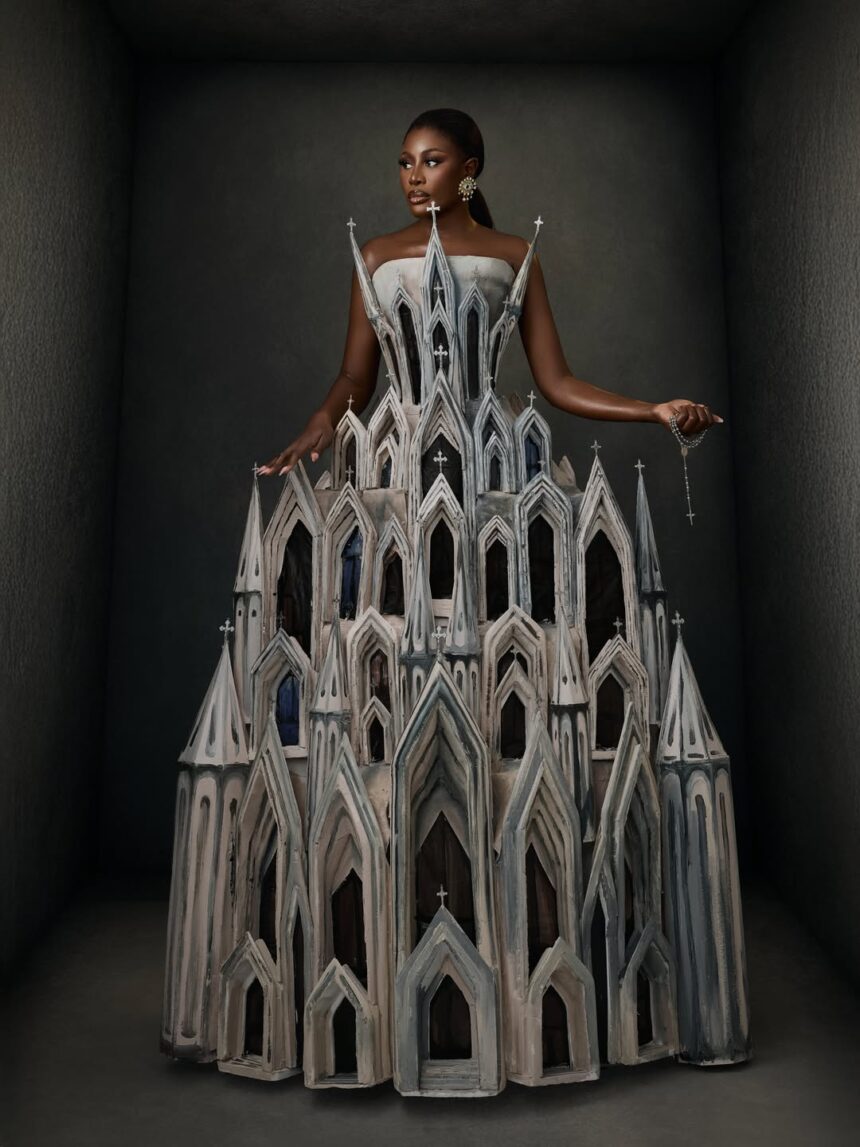
The conversation around Nana Akua Addo and her dramatic Cathedral-inspired AMVCA look has quickly turned into one of the biggest fashion controversies to come out of this year’s Africa Magic Viewers’ Choice Awards.
What started as admiration for the architectural gown soon turned into accusations of design theft after fashion page La Mode Unknown publicly called out similarities between Nana’s dress and a concept previously associated with ALmée Couture.
Now, both sides have shared their own explanations, and social media has been divided ever since.
How The Controversy Started
The issue first gained attention after La Mode Unknown posted side-by-side comparisons of Nana Akua Addo’s Cathedral dress and a previously shared concept linked to ALmée Couture.
The page described the situation as “blatant theft” and questioned whether the fashion industry was ready for the conversation around originality and creative ownership.
La Mode Unknown later shared screenshots and statements allegedly connected to ALmée Couture, further fueling the discussion online.
Wanna talk about this blatant THEFT on the right or we are not ready for this conversation yet…🪡 https://t.co/9P6ZtCOsid pic.twitter.com/W42mioWEsR
— La Mode Unknown (@LaModeUnknown) May 11, 2026According to ALmée Couture, the gown was initially part of a commissioned couture project involving Nana Akua Addo. The brand claimed the Cathedral-inspired idea was brought to them by the actress, after which they developed the final artistic vision, silhouette, structural detailing, and couture interpretation.
In a public statement, the fashion house explained that although the project was later cancelled and the client’s deposit refunded, they were surprised to later see a final gown allegedly created elsewhere using what they described as their original sketch and design direction.

The statement read in part:



“This piece required extensive creative development, countless hours of craftsmanship, and detailed handwork from our team.”
The brand also stated that they believed their creative contribution deserved recognition and respect.
Nana Akua Addo Responds
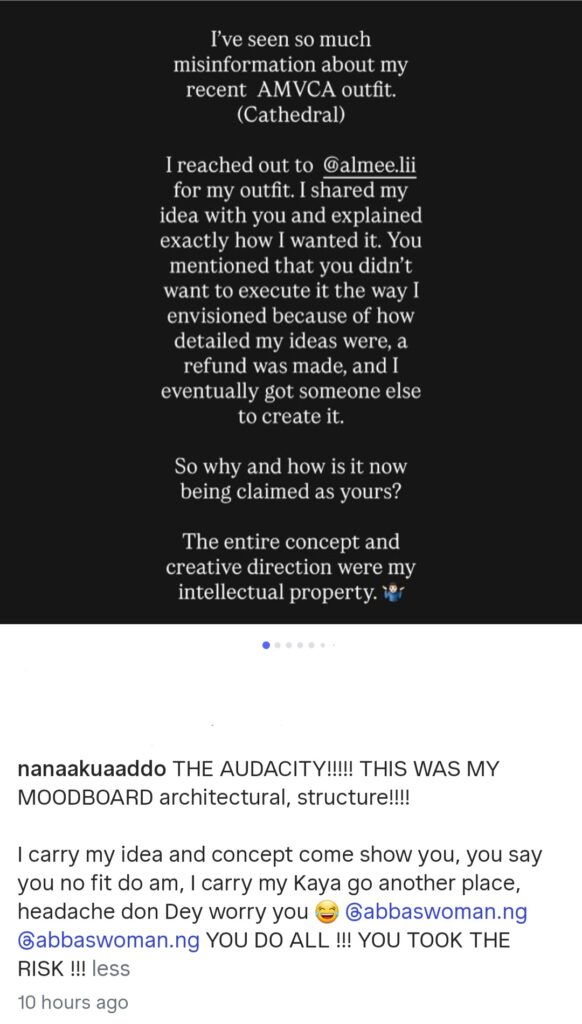
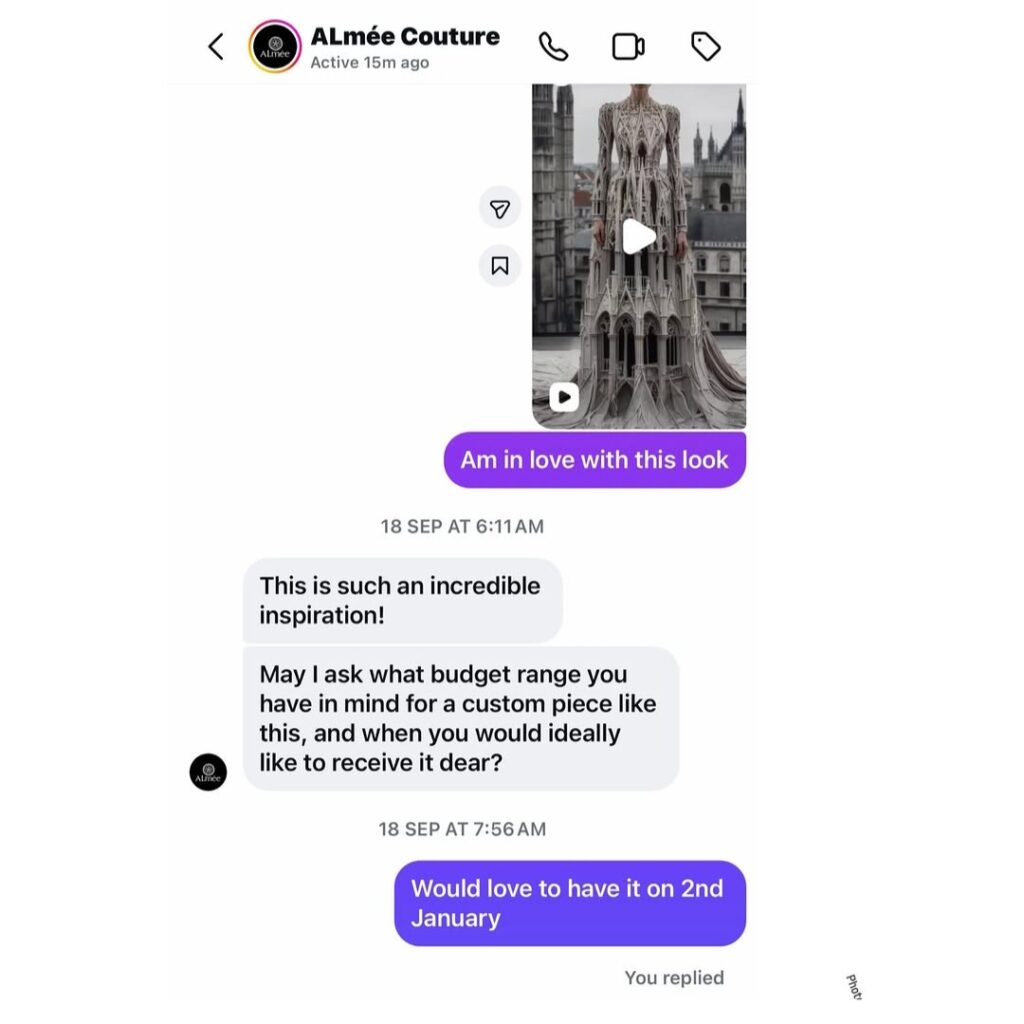
Not long after the allegations spread online, Nana Akua Addo shared screenshots of her conversations with ALmée Couture to defend herself.
According to Nana, the Cathedral concept was always her vision from the beginning. She explained that she approached the fashion house with a detailed idea and reference materials, but they allegedly told her they could not execute the dress exactly the way she wanted it.
One of the shared chats appeared to show ALmée Couture explaining that recreating the exact reference image might be too risky and visually overwhelming if the architectural detailing covered the entire dress.
Nana argued that because the brand declined to fully execute her idea, she decided to take the concept elsewhere.
In her statement, she wrote:
“I reached out to @almee.lii for my outfit. I shared my idea with you and explained exactly how I wanted it.”
She continued:
“You mentioned that you didn’t want to execute it the way I envisioned because of how detailed my ideas were, a refund was made, and I eventually got someone else to create it.”
Nana also strongly rejected claims that the design belonged to ALmée Couture, insisting that the original concept and creative direction came from her.
“The entire concept and creative direction were my intellectual property.”
In another emotional caption, she added:
“I carry my idea and concept come show you, you say you no fit do am, I carry my Kaya go another place, headache don Dey worry you.”
She also praised the Nigerian designer who eventually created the now-viral AMVCA look, thanking them for taking the “risk” to bring her vision to life.
The Bigger Conversation Around Fashion Inspiration And Ownership
The controversy has sparked wider conversations online about where inspiration ends and ownership begins in fashion.
Many people believe clients should be free to take their ideas elsewhere if a designer declines a project. Others argue that once a fashion house contributes sketches, structure development, and creative interpretation, that work also deserves acknowledgment.
What makes this situation more complicated is that both sides appear to agree on one thing: the initial inspiration came from architectural Cathedral references. The disagreement seems to center on who transformed that inspiration into the final couture design.
Fashion, especially couture, often exists in a grey area where inspiration, collaboration, moodboards, references, and interpretation overlap. That is why debates like this tend to become emotional very quickly, particularly when viral red carpet moments are involved.
Our Honest Thoughts
Looking at the screenshots shared publicly, it appears Nana Akua Addo already had a strong Cathedral-inspired vision before approaching ALmée Couture. The messages suggest she came with reference images and a very detailed direction she wanted executed.
However, ALmée Couture also seems to have contributed creatively by attempting to interpret and refine the concept through couture craftsmanship and structural design ideas.
So the real debate may not simply be about “stealing,” but about how much ownership belongs to the client versus the designer once creative collaboration begins.
What cannot be denied is that the final AMVCA dress became one of the most talked-about fashion moments of the year. Whether people loved it or questioned its origins, it definitely got the entire fashion community talking.
And honestly, that conversation about originality, inspiration, AI references, couture interpretation, and creative credit is probably far from over.