




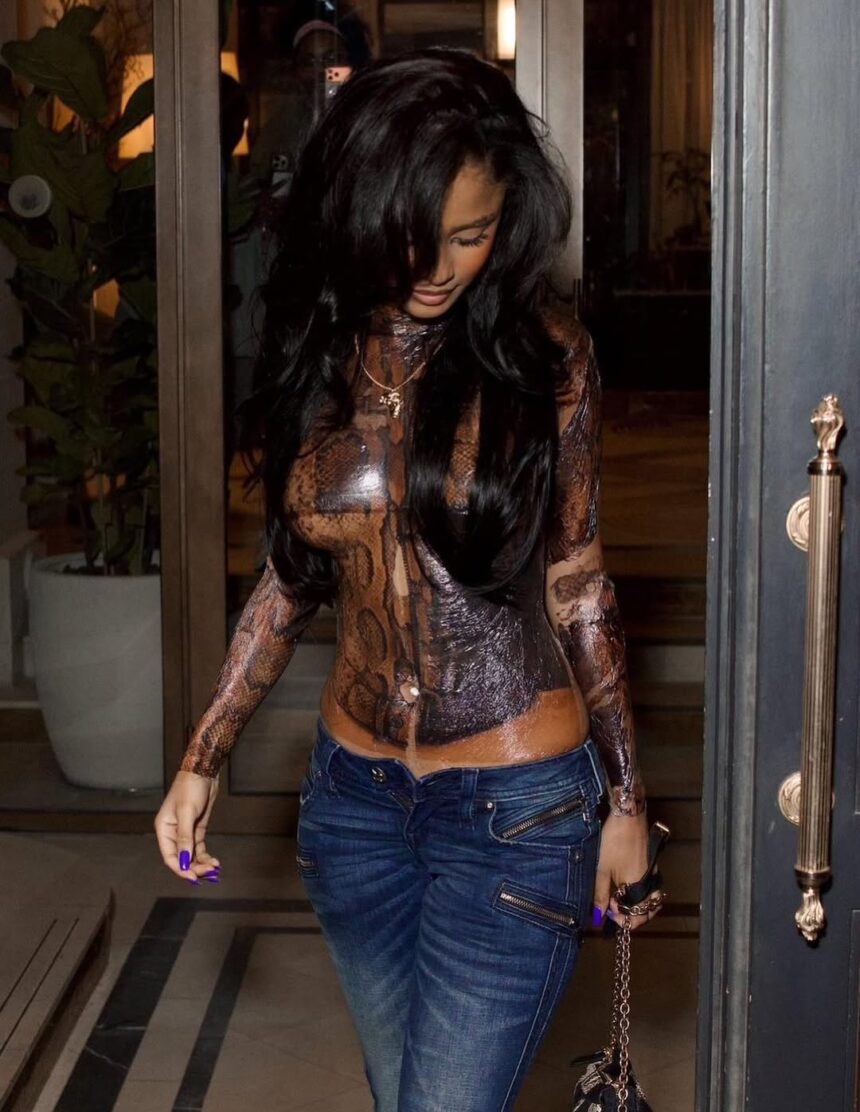
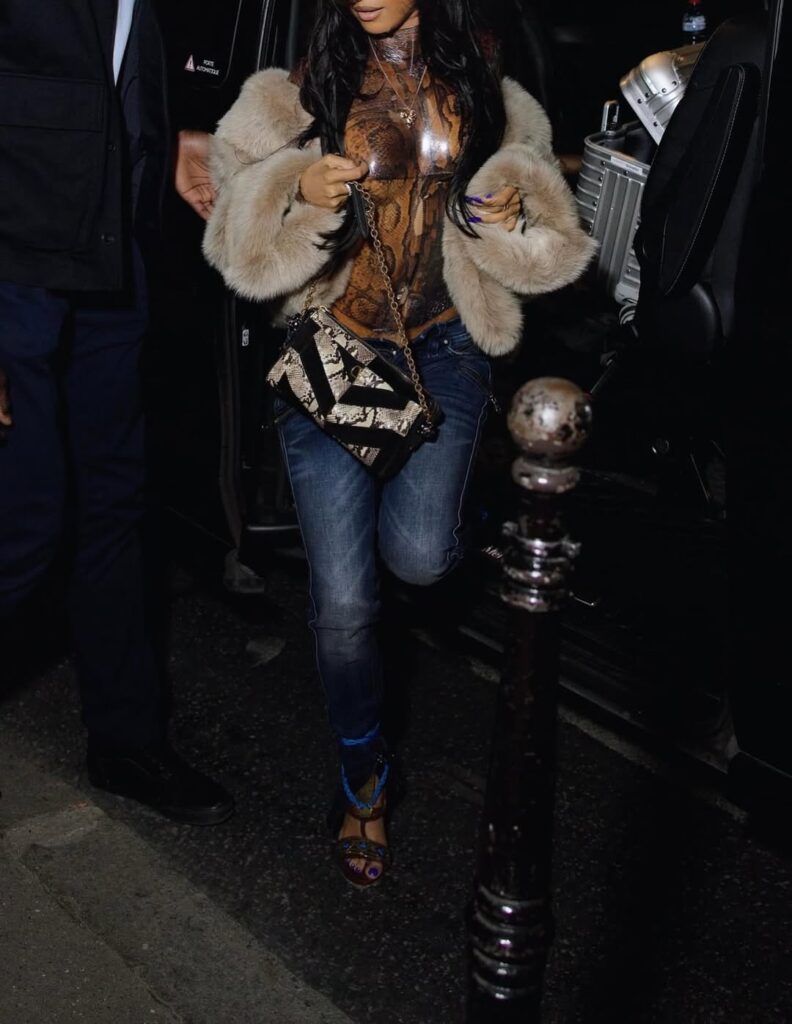
Paris Fashion Week is never short on dramatic fashion moments, but Tyla may have just delivered one of the most talked-about looks of the season. The South African star stepped out in Paris wearing what appeared to be a fitted long-sleeve top paired with ultra-low-rise jeans, only for fans to realize that the “top” wasn’t clothing at all. It was a temporary tattoo designed to look like one. Instantly, photos of the look flooded social media timelines, sparking fascination, praise, confusion, and plenty of debate about whether this daring style signals the future of fashion or simply a headline-grabbing moment.
For Tyla’s tattoo top, the illusion was striking. A snakeskin-inspired design covered her torso and arms, sculpting her body like a second skin while leaving her back completely bare. From the front, it looked like a glossy, body-hugging jacket. From the side and back, it became clear that this was not fabric but art applied directly to the skin. Styled with dangerously low-rise denim, heels, and Tyla’s signature effortless confidence, the outfit balanced between edgy street style and performance art.
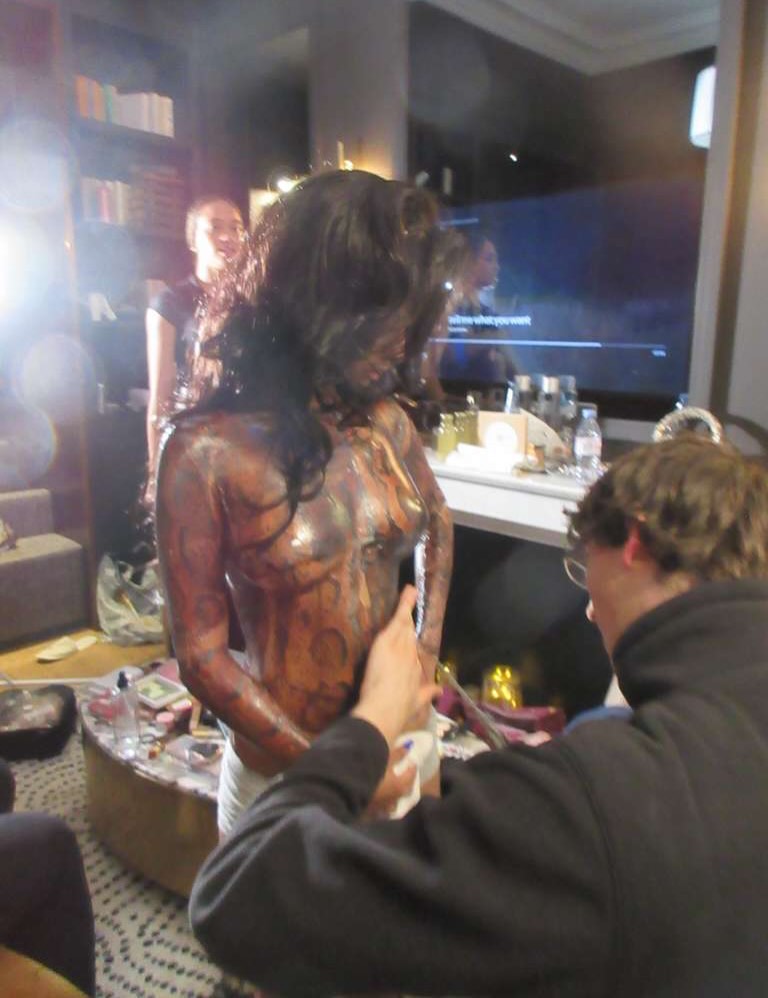
What makes this look so compelling is not just the shock value but the concept behind it. Fashion has long flirted with the idea of “skin as clothing,” from sheer dresses to latex bodysuits and illusion mesh garments that mimic nudity. Designers frequently experiment with how far clothing can disappear while still technically being present. Tyla’s tattoo top pushes that idea even further by removing the garment entirely and replacing it with body art that behaves like one. It blurs the line between fashion, beauty, and visual art in a way that feels both futuristic and slightly rebellious.
Still, while the internet is obsessed, it does not necessarily mean this is about to become everyday streetwear. Fashion Week often serves as a laboratory for extreme ideas that later evolve into more wearable trends. What is more likely to trickle down from this moment are tattoo-print fabrics, illusion bodysuits, and daring partywear pieces inspired by the aesthetic rather than literal tattoo tops. Festival fashion, editorial shoots, and celebrity styling may embrace similar looks long before the average fashion lover does.
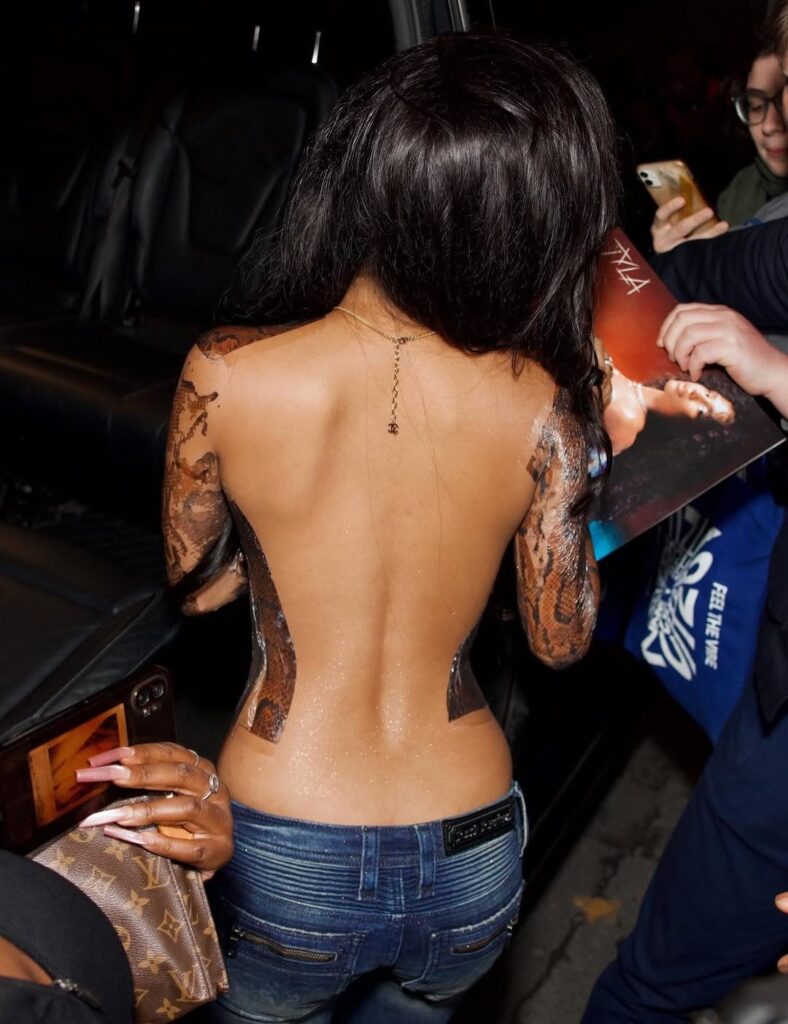
There is also a strong Y2K energy behind the outfit, which aligns perfectly with Tyla’s rising image as a global pop style icon. Low-rise jeans, exposed midriffs, and fearless sensuality were staples of early 2000s fashion, and Gen Z has been reviving that era with a modern twist. Tyla’s interpretation feels like the next evolution of that trend, taking the classic crop-top silhouette and transforming it into something far more daring and artistic.
Beyond trends, the look works because of Tyla herself. Not every celebrity could pull off wearing what is essentially painted skin and make it feel intentional rather than gimmicky. Her relaxed body language and minimal styling kept the tattoo top as the focal point without tipping into costume territory. In an era when attention is currency, the outfit achieved exactly what great celebrity fashion should: it made people stop scrolling.
Whether this becomes a lasting movement or remains a standout Paris Fashion Week moment, one thing is certain — it reflects a growing appetite for boundary-pushing fashion that challenges traditional ideas of clothing. As technology, beauty, and design continue to merge, the future of style may involve more experimentation with the body itself as a canvas.
For now, Tyla’s tattoo top lives in that exciting space between trend and spectacle. It may not replace your wardrobe anytime soon, but it has already secured its place as one of the most unforgettable fashion moments of the year. And if fashion history has taught us anything, today’s shocking runway idea often becomes tomorrow’s toned-down must-have.