


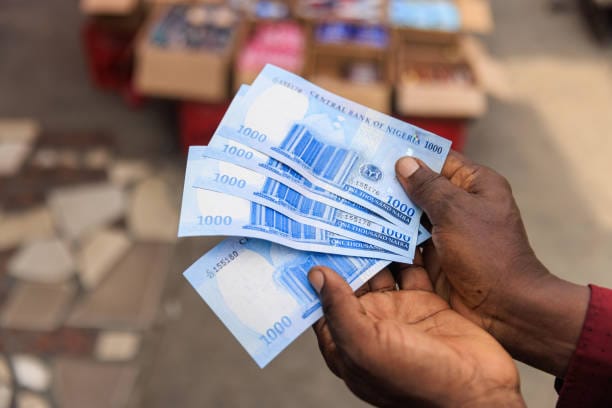


Ask a Nigerian fashion brand owner how the business is going and they will almost always tell you about the orders. The clients they dressed last month. The collection that got attention. The celebrity placement that had everyone asking questions. What they will rarely tell you, what some of them will go out of their way to avoid telling you, is what the numbers actually look like. How much came in. How much went out. What is sitting in the account right now. Whether any of it is actually working financially.
- Why Fashion Brand Owners Avoid Talking About Money
- The Number Some Fashion Brands Have Never Actually Calculated
- The Difference Between Revenue and Profit
- Paying Yourself Is Not Optional
- The Cost of Chaotic Cash Flow
- The Slow Season Nobody Plans For
- Debt and the Fashion Brand That Cannot Say No to an Order
- What the Business Actually Needs From You
This is not dishonesty. It is avoidance. And it is one of the habits that quietly holds Nigerian fashion brands back for years longer than necessary. The money conversation is uncomfortable. It forces you to look at things you might not be ready to see. It asks questions that do not have flattering answers yet. But it is also the conversation that separates the Nigerian fashion brands that build something lasting from the ones that stay talented and struggling indefinitely.
Why Fashion Brand Owners Avoid Talking About Money
Before getting into the numbers it is worth understanding why this avoidance happens in the first place because it does not come from nowhere.
Nigerian fashion brand owners who came into this industry through passion, and many of them did, often find that the business side feels like an intrusion on something they genuinely love. They built this from creativity, from an eye for detail, from the satisfaction of making something beautiful for someone. Looking too closely at spreadsheets and profit margins can feel like it takes something away from that.
There is also the fear of what the numbers might say. If you have been running your fashion brand for two years and you sit down to honestly calculate what it has made versus what it has cost you, the answer might be uncomfortable. And so long as you do not look too closely you can keep telling yourself that things are going well because the orders are coming in and the clients are happy.
But the orders coming in and the business being financially healthy are not the same thing. And the longer you avoid looking at the difference between them the harder it becomes to close the gap.
The Number Some Fashion Brands Have Never Actually Calculated
Here is a question worth sitting with. Do you know your profit margin? Not roughly. Not approximately. Do you know, for each piece you produce and sell, exactly how much of the selling price is actual profit after every single cost has been accounted for?
Some Nigerian fashion brand owners have never done this calculation properly. They know what they charge. They know roughly what the fabric costs. But the full picture, every material, every hour of labour, every transport cost, every packaging expense, every portion of their monthly overheads, every minute of their own time, totalled up and subtracted from the selling price to give a true profit number, that has never been honestly mapped out.

And that gap in knowledge creates a problem. Because without knowing your real profit margin you cannot make good decisions about anything. You cannot know whether taking on more orders will actually make you more money or just make you busier at the same level of income. You cannot know which pieces in your range are worth your time and which ones you are essentially producing at a loss. You cannot know how many orders you need per month to cover your costs, pay yourself properly and still have something left over to invest back into the business.


You are flying blind. And flying blind in business always costs more than the discomfort of looking at the numbers honestly would have.
The Difference Between Revenue and Profit
This distinction is so important and so often confused in the Nigerian fashion space that it deserves its own section.
Revenue is everything that comes in. Every deposit, every balance payment, every order completed and paid for. It is the total number that goes into your account from the business.
Profit is what is left after everything that went out has been subtracted. Every material cost, every labour payment, every transport expense, every utility bill, every packaging cost, every marketing spend, every tool or equipment purchase, your own time valued at a fair rate, all of it gone from the revenue figure. What remains is your actual profit.
A Nigerian fashion brand can have impressive revenue and almost no profit. A brand taking in ₦500,000 a month in orders sounds like a successful business. But if ₦480,000 of that is going straight back out in costs the brand is effectively running on ₦20,000 a month of actual profit. That is not a sustainable business. That is an illusion of one.
The revenue number feels good. It is the number that tends to come up when people ask how the business is doing. But profit is the only number that actually tells you whether the business is working.
Paying Yourself Is Not Optional
This one makes some Nigerian fashion brand owners uncomfortable so it needs to be said very directly.
If you are not paying yourself a regular salary from your fashion brand, you are not running a business. You are running a charity that benefits your clients.
There is a pattern that plays out in this industry where the brand owner reinvests everything back into the business, buys more fabric, upgrades equipment, spends on marketing, and treats their own financial needs as something to be addressed eventually when the business is doing better. But eventually never arrives because a business that does not build the cost of its founder’s time and income into its financial model is a business that will always feel like it is not quite there yet.
Your time has a value. Your skill has a value. The hours you put into every piece, every client consultation, every late night finishing a delivery, those hours deserve to be compensated at a rate that reflects what you are worth. And that compensation needs to be built into your pricing and drawn from your revenue consistently. Not occasionally. Not when there is enough left over. As a fixed commitment every single month.
When you start paying yourself properly something interesting happens. The business becomes more honest. Because now the real question is not whether the orders are coming in. It is whether the orders are generating enough genuine profit to pay you, cover all your costs and still have something left to grow with. And that question leads to much better decisions about pricing, about which clients to take on and about how to structure the business going forward.
The Cost of Chaotic Cash Flow
Cash flow is the movement of money in and out of your business. And in Nigerian fashion, chaotic cash flow is one of the reasons promising brands stall or collapse even when the work is genuinely good.
Here is how it tends to play out. Money comes in from a new order deposit. Before it can be allocated properly it gets spent on materials for that order plus a few outstanding costs from previous orders. Another client pays a balance. Part of it covers the tailor, part covers a delivery that needs to go out today and part disappears into personal expenses because the line between business and personal money has never been clearly drawn. By the end of the month there is very little left and the cycle starts again.
In this model the business is always reacting. Always scrambling. Never building. And a brand in this situation can be taking in significant amounts of money every month and still feel perpetually broke because the money never stays long enough to do anything meaningful.
The fix starts with separation. Business money and personal money must be in different accounts. Not eventually. Now. Every naira that comes into the business goes into the business account and only moves to personal when it has been properly allocated as your salary. That one discipline alone will change how clearly you can see what your business is actually doing financially.
From there tracking every transaction, every income, every expense, in a simple spreadsheet or a free tool like Wave, starts to build a picture that you can actually make decisions from. You start to see patterns. You start to see which months are historically slow and plan for them. You start to see which costs are eating more than they should. You start to see the business clearly instead of through the fog of constant financial reaction.
The Slow Season Nobody Plans For
Every Nigerian fashion brand has slow seasons. The months when the Owambes thin out, the weddings slow down and the inquiries drop to a trickle. Every brand owner knows this is coming because it comes every year. And yet it is possible to arrive at that slow season completely unprepared for it financially, even after years in the business.
The result is panic. Desperate discounting to attract any order at all. Taking on clients that the red flags said to avoid because the income is needed. Stress that affects the quality of work and the health of the brand owner. All of it entirely predictable and almost entirely preventable with basic financial planning.
Planning for slow seasons is not complicated. It just requires the discipline to look ahead and set money aside during the busy months specifically to cover the costs of the quiet ones. It requires knowing your monthly baseline costs well enough to calculate how much buffer you need to get through a slow period without the business going into distress.
That knowledge only comes from tracking your numbers consistently. Which is why the money conversation is not just about the present. It is about building the kind of financial visibility that protects your business from the future it can already see coming.
Debt and the Fashion Brand That Cannot Say No to an Order
This one is real and it does not get talked about enough. There are Nigerian fashion brands carrying some form of debt right now. Money borrowed to buy fabric for an order before the deposit came in. Supplier credit that stretched further than it should have. Personal loans taken out to cover a production cost the business could not afford. And because fashion is a passion business that debt often gets carried quietly, with the assumption that the next good month will clear it.
Debt in itself is not a crisis. Used strategically, credit can be a tool for growth. The problem is debt taken on reactively, to cover a gap that better financial planning would have prevented, and serviced by taking on more orders at prices that cannot actually sustain the business, just to keep money moving.
The way out of this cycle is not more orders. It is better orders at better prices with a clearer understanding of what each one actually costs and contributes. It is the willingness to say no to an order that does not make financial sense even when the pressure to say yes is high. It is building the financial buffer that means the next slow season or unexpected cost does not immediately send you back to borrowing.
None of that is possible without facing the money conversation honestly.
What the Business Actually Needs From You
Your fashion brand does not need you to be a financial expert. It does not need you to understand complex accounting or build sophisticated financial models. What it needs is for you to stop treating the money side of the business as something other people worry about.
It needs you to know your numbers. Not perfectly but honestly. What comes in, what goes out, what stays. What each piece actually costs to produce. What your real profit margin is. What you need to make every month to sustain the business and pay yourself properly.
It needs you to track those numbers consistently even when it is uncomfortable to look at them. Especially when it is uncomfortable to look at them.
It needs you to make pricing decisions based on what the business actually needs to be sustainable rather than what you think clients want to hear. It needs you to build a financial buffer for the slow seasons you already know are coming. It needs you to pay yourself like the skilled professional you are instead of treating your own income as whatever is left after everything else.
None of this is about becoming a different kind of person or abandoning the creative passion that brought you to this industry in the first place. It is about giving that passion a structure that can actually sustain it for the long term.
Because the Nigerian fashion brands that last are not just the talented ones. They are the ones where the person running the business decided to face the money conversation honestly and build something that the numbers could actually support.
When was the last time you sat down and looked at your fashion brand numbers honestly? Drop a comment or share this with a fashion brand owner who needs to read it today.
Photo: Getty images