





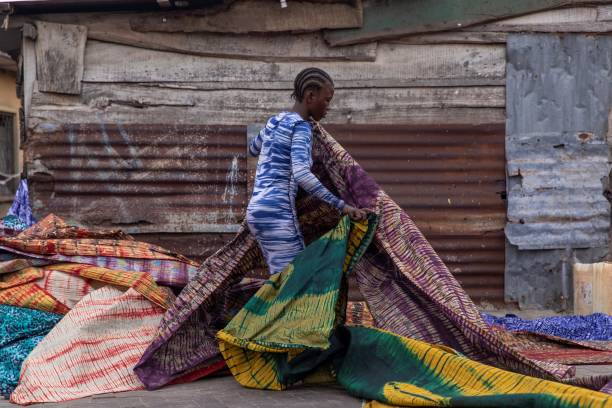
Nigeria’s traditional Adire fabric could become one of the country’s biggest fashion success stories if the right investments are made, according to financial expert Dr. Tunde Bajela.
Speaking at the Adire Renaissance Stakeholders’ Engagement in Abeokuta, Ogun State, Bajela called on the Federal Government to invest more in Nigeria’s indigenous textile industry. He believes Adire has the potential to become a $1 billion global business while creating jobs, increasing exports, and boosting the country’s economy.
The event, themed “How Adire Becomes a $1 Billion Trade Asset from Africa to America and Beyond,” was organised by the Innovation Center for Leadership and Entrepreneurship Development (ICLED) in collaboration with Wessy College of Arts and Technology.
Adire Could Become a Global Fashion Brand
According to Bajela, Nigeria has a rare opportunity to position Adire as a globally recognised textile. While the country continues to import most of its textile materials, demand for African fashion and handmade fabrics is growing across the world.
He noted that Nigeria’s textile market is expected to grow from more than $9 billion in 2025 to over $16.62 billion by 2034.
He also pointed out that the global textile and apparel industry is worth an estimated $1.24 trillion.
“If Nigeria builds Adire into a $1 billion industry, we would still account for less than 0.01 percent of the global market,” Bajela said. “That shows just how much room there is for growth.”
According to him, investing in the Adire value chain would help local manufacturers and artisans compete in the international fashion market while strengthening Nigeria’s non-oil economy.

Protecting What Makes Adire Special
Bajela also expressed concern about the increasing number of foreign-made fabrics that imitate traditional Adire designs.



He said these products pose a threat to local producers, but believes handcrafted Adire still has an advantage because of its authenticity and cultural value.
“The originality of handcrafted Adire cannot be copied,” he said. “Our products have an authenticity that gives them premium value in the international market because of the creativity of our local artisans and research institutions.”
He added that expanding Adire production would benefit several industries, including cotton farming, dye production and chemical processing. It would also create more employment opportunities, especially for women and young people.
To support the industry, Bajela proposed the creation of a dedicated Adire Fund that would provide affordable financing for artisans, manufacturers and businesses operating within the sector.
Ogun State Wants to Preserve Adire Heritage
Ogun State Commissioner for Health, Dr. Tomi Coker, said the state government remains committed to protecting Adire while promoting it as an important driver of economic growth.
According to her, Governor Dapo Abiodun has consistently used his public appearances to promote the locally made fabric.
“If you look at the Governor, he wears Adire with pride every day. He has become an ambassador for the fabric, supporting local artisans and strengthening the local economy,” she said.
Coker also revealed that public officials in Ogun State have been encouraged to wear Adire every Friday as part of efforts to increase the use of locally produced textiles.
She added that discussions are ongoing about introducing Adire-inspired school uniforms to encourage children to appreciate indigenous fabrics from an early age.

Government Moves to Tackle Foreign Imitations
Coker said the Ogun State Government is supporting policies to discourage the importation of machine-made fabrics that imitate authentic Adire, particularly those produced in China.
According to her, protecting local producers has become a priority as imitation products continue to affect the market.
“A lot is happening behind the scenes to protect local producers and preserve the authenticity of Adire,” she said.
Adire Hub Planned to Preserve History
Earlier, ICLED founder Prof. Olajumoke Familoni said the Adire Renaissance initiative was created to preserve the originality of Adire while giving young people, especially girls, opportunities to develop skills in entrepreneurship, textile production, science and technology.
She disclosed that plans are underway to establish an Adire Hub to preserve the fabric’s history while encouraging innovation in the industry.
The proposed centre will include an Adire museum, historical archives, exhibition galleries, original pattern collections and displays of locally made products such as bags, shoes and home décor.
Familoni also called on governments at every level to invest more in local manufacturing.
“As a nation, we cannot continue to import everything we need,” she said. “We must produce our own goods, not just food but textiles and other valuable products.“
Adire, which has its roots in Abeokuta among the Egba people of Ogun State, has grown into one of Nigeria’s most recognised indigenous fabrics. In recent years, governments, cultural advocates and industry stakeholders have intensified efforts to position it as a major non-oil export while creating more opportunities for local artisans and businesses.