


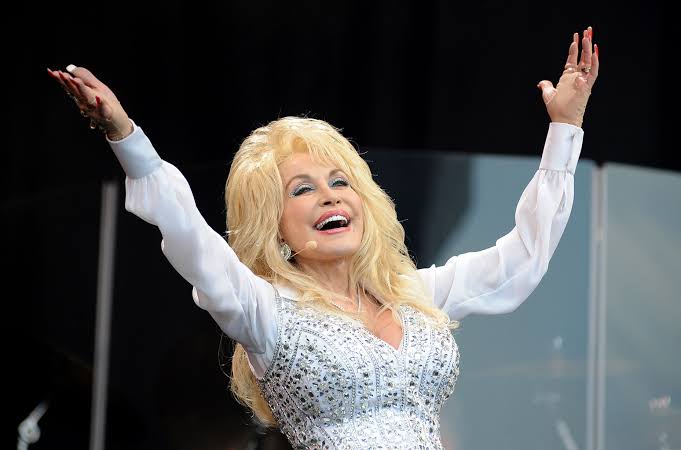


Dolly Parton, the legendary country music singer, songwriter, actress and philanthropist, has died at the age of 80.
Her death was announced on Tuesday, August 25, by her nephew Bryan Seaver in an emotional video shared on Instagram. Seaver, who had served as Parton’s head of security for more than two decades, said the announcement was something she had asked him to make years ag
He described the moment as one filled with “absolute pride and great sadness,” adding that Parton had “lived in the light” and was now “in the arms of Jesus.” A cause of death has not been disclosed.
For more than six decades, Dolly Parton built a career that stretched far beyond country music. With songs such as “Jolene,” “9 to 5” and “I Will Always Love You,” she became one of the most recognisable entertainers in the world and earned the enduring title of the Queen of Country.
Parton wrote more than 3,000 songs during her career and sold more than 100 million records worldwide. She won 10 Grammy Awards, received the Recording Academy’s Lifetime Achievement Award and became one of the rare artists whose influence crossed music, film, business and philanthropy.
From a Tennessee cabin to global stardom Dolly Rebecca Parton was born on January 19, 1946, in Tennessee, the fourth of 12 children. She grew up in a two-room cabin in the Smoky Mountains in a family she later described as “dirt poor.
Her father worked as a sharecropper before eventually owning a small tobacco farm, while her mother passed down a love of traditional songs and storytelling. Those early experiences would become a major part of the person and songwriter Parton eventually became.
After graduating from high school in 1964, Parton moved to Nashville the following day to pursue music. Her songwriting talent quickly attracted attention, and she released her debut album, Hello, I’m Dolly, in 1967.

That same year, she joined The Porter Wagoner Show, where country star Porter Wagoner became her mentor. Their professional partnership produced several successful recordings before Parton decided to focus on her solo career.
RELATED STORIES



Her decision to leave Wagoner inspired one of her most famous songs. Parton wrote “I Will Always Love You” about their professional separation, a song that would later become a worldwide phenomenon through Whitney Houston’s recording for The Bodyguard.
Around the same period came “Jolene,” another song that would become inseparable from Parton’s legacy. Both songs appeared on her 1974 album Jolene, helping introduce her music to audiences beyond the traditional country scene.
Parton’s success continued to grow throughout the 1970s. Her 1977 album “Here You Come Again” became her first million-selling album and earned her first Grammy.
Then came Hollywood.
In 1980, Parton made her film debut alongside Jane Fonda and Lily Tomlin in 9 to 5. She also wrote and performed the film’s theme song, which became a No. 1 hit and earned an Oscar nomination for Best Original Song.
The success opened the door to a second career on screen, with Parton appearing in films including The Best Little Whorehouse in Texas, Steel Magnolias and Joyful Noise.
But even as her fame grew, Parton continued building businesses outside entertainment. She became closely associated with Dollywood, the Tennessee theme park she helped transform after acquiring an interest in it in the 1980s.
Her legacy was bigger than music
For many people, Dolly Parton’s greatest legacy may not be found on a record chart.
In 1995, she launched the Imagination Library, a childhood literacy programme inspired partly by her father’s inability to read. The programme provides free, age-appropriate books to children from birth to age five.
By June 2026, the Imagination Library had gifted more than 325 million books across the United States, Canada, the United Kingdom, Australia and the Republic of Ireland.
Parton also supported disaster relief, medical research, education and other charitable causes. Her $1 million donation towards COVID-19 vaccine research became one of her most widely recognised acts of philanthropy.
In 2022, she received the Carnegie Medal of Philanthropy in recognition of her charitable work.
“I just give from my heart,” Parton said while discussing her approach to helping others. “I just see a need and if I can fill it, then I will.”
That generosity became just as important to her public identity as the blonde wigs, rhinestones and unmistakable voice.
Her final years
Parton’s health concerns became more public in 2025 when she postponed and later cancelled plans connected to a Las Vegas residency. She had also stepped back from some public appearances as she dealt with ongoing health issues.
Her death comes just over a year after the passing of her husband, Carl Dean, who died in March 2025 at 82. The couple had been married since 1966, remaining together for nearly six decades.
Now, after a career spanning generations, Dolly Parton leaves behind music that has been sung by millions, characters that remain beloved on screen, businesses that continue to carry her name and a philanthropic legacy that has reached children around the world.
The Queen of Country is gone, but the songs she gave the world will continue to live on.