




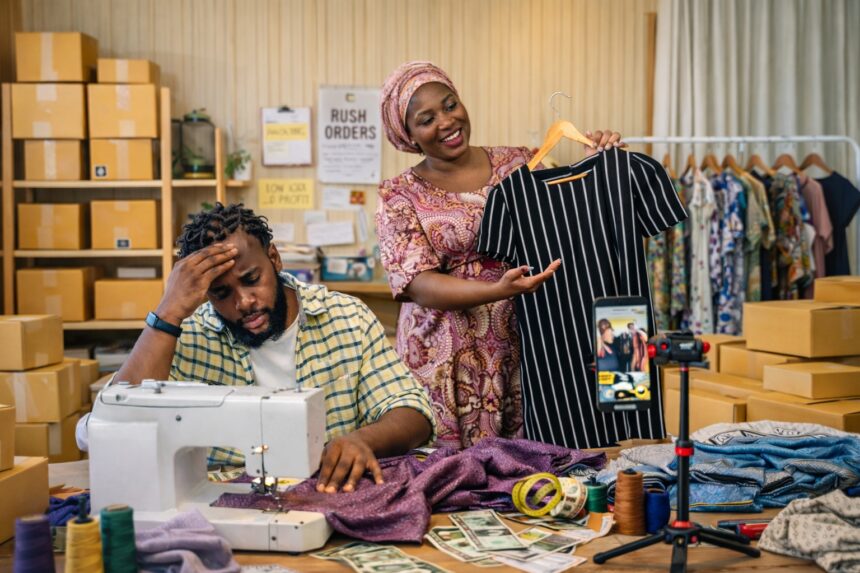
Busyness has become a strange badge of honour in the Nigerian fashion industry. Designers are always working, always booked, always stressed, always tired. There is movement everywhere: fittings, deliveries, rush orders, late nights. On the surface, it looks like growth. But underneath the activity, many Nigerian fashion brands are struggling to make a real profit.
This is not a contradiction by accident. It is the result of how many fashion businesses are structured and run.
Busyness Is Often Confused With Success
For many Nigerian fashion brands, a full order book feels like proof that things are going well. The schedule is packed, customers are calling, and Instagram is active. But busyness only measures activity, not progress. A brand can be overwhelmed with work and still be financially stagnant.
When every day is spent producing, responding, and firefighting, there is little time to step back and ask an important question: Is this work actually making the business stronger?
Underpricing Keeps Brands Trapped
One of the biggest reasons Nigerian fashion brands stay busy but unprofitable is underpricing. Prices are often set emotionally rather than strategically. Many designers price their work based on fear: fear of losing customers, fear of being compared, fear of sounding expensive.
The result is predictable. More orders come in, but margins disappear. The brand works harder, not smarter. Over time, exhaustion increases while profit remains flat.
Underpricing also attracts the wrong kind of demand. Customers who negotiate heavily, rush timelines, and undervalue craftsmanship become the norm, further draining the business.
Poor Cost Awareness Erodes Profit
Many Nigerian fashion brands do not fully account for their real costs. Fabric, labour, fittings, reworks, electricity, logistics, rent, and time are rarely calculated properly. When these costs are underestimated, prices look reasonable on paper but fail in practice.

This is why a brand can appear busy yet struggle to pay staff, upgrade equipment, or reinvest in growth. Money is coming in, but it is not staying.

Speed Is Expected, But Rarely Paid For
Speed has quietly become part of the fashion promise. Rush orders, last-minute changes, and unrealistic deadlines are treated as normal. In many cases, brands do not charge appropriately for urgency.
What should be a premium service becomes a standard expectation. The workload increases, pressure rises, and the business absorbs the cost.
Social Media Increases the Pressure to Say Yes
Social media has amplified this cycle. Visibility creates demand, and demand creates fear. Turning down work feels risky, especially when attention is unpredictable. So many Nigerian fashion brands say yes to everything, even when the numbers do not make sense.
Being busy becomes a form of security, even when it is quietly damaging the business.
Founders Are Stuck in Execution Mode
Many founders spend all their time executing. Designing, supervising, selling, responding, and solving problems. There is little space for reflection, planning, or restructuring. Without stepping back, pricing problems remain unaddressed, and inefficiencies continue.
The brand runs constantly, but without direction.
Profit Requires Restraint, Not More Work
Profitability requires difficult decisions. Saying no to work that does not make sense. Pricing based on reality, not desperation. Building systems that protect the business as much as the customer.
Busyness feels productive. Profitability feels slower. But only one leads to sustainability. A successful fashion brand is not defined by how full the schedule looks. It is defined by whether the work being done strengthens the business over time.
Until Nigerian fashion brands learn to separate activity from progress, many will remain visible, exhausted, and financially strained. Being busy keeps a brand alive. Being profitable allows it to grow.